


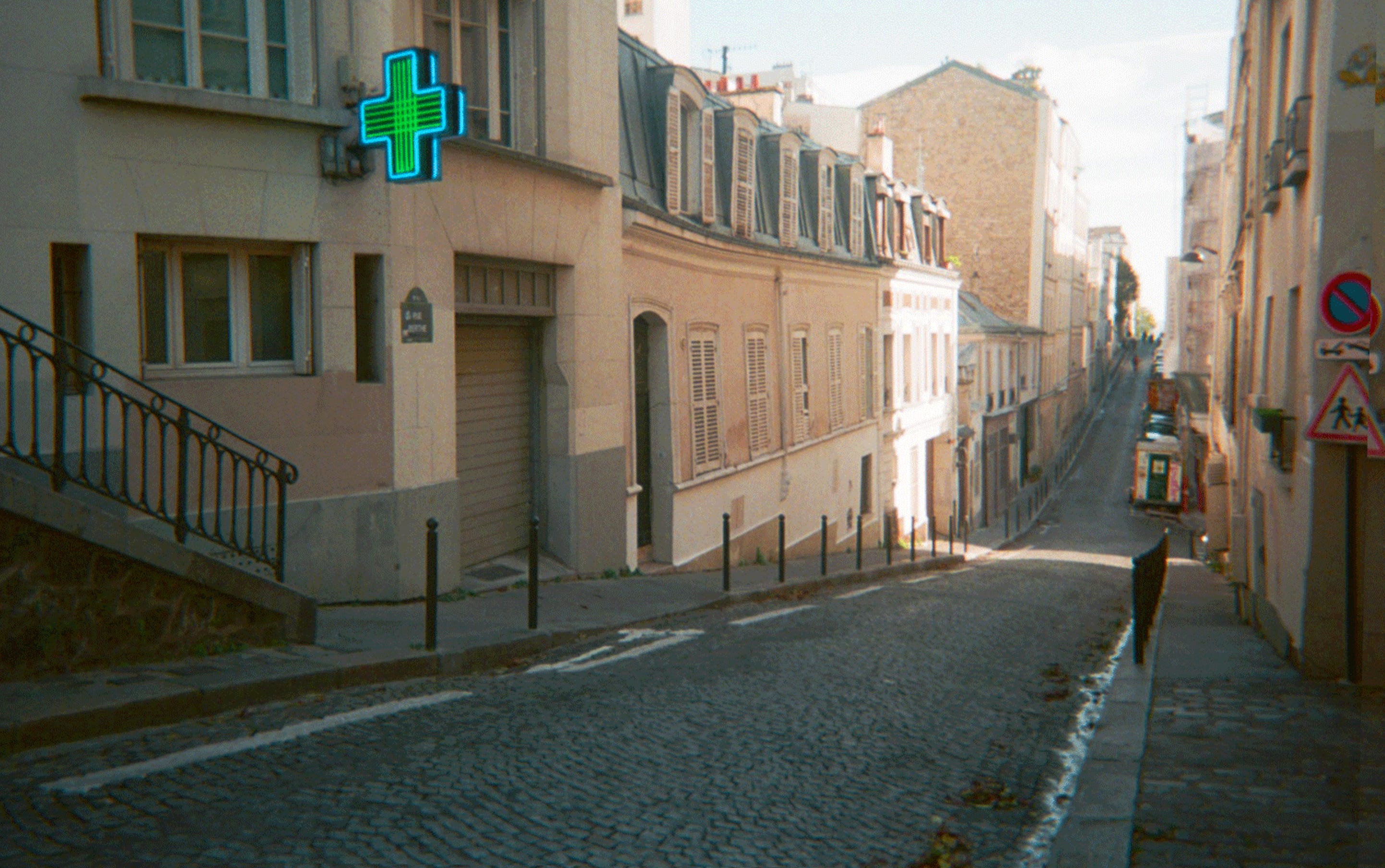
There’s only one clocktower on this street, with two clocks, and they each show different times. Andy walks with me, shortening his strides to match my pace.
“You don’t have to come in,” I say when we reach the office.
“I’ll come in,” Andy says.
The waiting room is encouragingly empty. We’ve only been there for a minute when a gray-haired woman in scrubs enters the room, clipboard in hand. She calls my name, drawing it out like I’m a lost dog.
“I’ll wait,” Andy says.
“It’ll stress me out to think of you waiting,” I say.
I turn away and the nurse leads me down a hall. She asks if I need the bathroom. I lie and say no. Her accent is heavy and unplaceable. We enter a closet-sized room containing only one chair. I sit down and flex my bladder experimentally.
The nurse stands before my chair, stooped at eye level. I could balance a glass of water on her back.
She asks for my name and birthdate, cross-checking my responses with the form on her clipboard. “Lamm,” she repeats. “Where is that from?”
“Germany,” I tell her, even though it’s not from anywhere. I just made it up a few years ago when I decided to change my name.
“Guten Tag,” she says. It takes me a moment to recognize the words through her accent. She swabs my arm with an alcohol pad. “Jesus loves you,” she says.
“Thanks,” I say.
“In German,” she says. “You’re German?”
“Oh,” I say, thinking hard. “Jesus liebt dich?”
“Jesus liebt dich,” she repeats, inserting a needle into a vein in my arm. “I won’t remember that. You can open your fist now.”
Dark blood spools out of me into a thin plastic tube, and it feels too late to clarify things.
“I was there in ‘95,” she says. “I did a semester in Berlin.”
She thinks for a long moment.
My blood waits suspended between containers.
I wonder about her other patients, other tasks. The door is closed. We’ve been in here a while.
“Can I take your jewelry?” she says, gesturing to my neck. “We don’t have much time.”
It seems like we have a lot of time. She opens the door and the time rushes out like air. I undo the clasp and hold the necklace in my palm. She looks at it. The cross looks up at her, its single diamond like a baby tooth. She lets the door close again.
“You’re a believer,” she says. She looks into my face with fragile hope. “Jesus Christ?”
“Yes,” I say.
“Jesus Christ?” she says.
“Yes,” I say.
“Jesus liebt dich,” she says.
“Nice,” I say. “You remembered.”
“My name is Maria,” she says. She already knows my name. “I went back in a dream once.”
I think for a moment, then realize what she meant. “To Germany?” I say.
“July 12, 2007. I dreamt I was on my way to a fellowship meeting, wearing a long green dress.” She gestures with both hands down the length of her brief body. “A dream,” she reiterates.
I ask her why she remembers the date.
“Some German festival or holiday. For Martin Luther King?”
“Martin Luther,” I say.
“King,” she supplies.
“But why do you remember it?” I ask again. There’s a new urgency in my tone that has nothing to do with the brain scan, the co-pay, my mother’s disease. It’s the urgency I feel in church when the music begins and I can’t find the right hymnal page.
“There was a man,” Maria says, her voice like something handed to me under a table. “A Christian man.” She pauses, closing her eyes.
I think of Andy, the first time he took me to church, how his fingers found the Holy Water automatically as he walked in. How I followed blindly, my hands dry.
Suddenly I can feel July 12, 2007 taking up space in the room, like another channel of reality. When I was a kid, the TV had a feature that let you watch two channels simultaneously: one at full size and one in a little square in the corner of the screen. That way you could monitor the football while watching a movie. Maybe July 12, 2007 is like that for Maria, playing on mute through the decades.
There is a silence that might go a hundred different directions.
I am about to ask about the man when Maria speaks.
“Listen,” Maria says.
I am listening so hard, fighting to hold onto every word.
“This contrast fluid they give you, it goes into your brain. So you have to eat brain-cleansing foods tonight. Radish, big-leaf celery, turmeric. No Chinese restaurants.”
“No,” I agree.
“It’s not healthy. When Giuliani was mayor, he took them to court.”
“Wow,” I say.
“It’s good you go to church,” Maria says. But I don’t go to church. Or, I go occasionally. I get anxious on Saturday nights, stay up too late, and miss the bells. I wake up refreshed but guilty, like I’ve gotten fat off stolen food.
Andy’s church is a big, neglected building in deep Brooklyn. Gilding and granite, stained glass and hand-painted murals, largely empty pews. I sing and he accompanies the choir on a baby grand, looking too good for a Sunday morning.
The songs take up space in our brains, but we hardly feel it. Andy once taught me that the simplest way to understand chord progressions is to write them out as Roman numerals. In the key of A, for example, an A chord becomes I.
“I had a vision at church once,” Maria says, looking up at the drop ceiling. “A huge bottle of B-Complex floating in the air, spinning like a globe. You know B-Complex?”
“Sure,” I say, thinking of the alphabetized vitamin shelves at CVS. I never know what I’m supposed to take. When my mom was diagnosed with Multiple Sclerosis, she bought vitamins and expensive powders and medicinal teas, but she didn’t change anything else, didn’t quit drinking or start exercising, just layered holistic health on top of holistic unhealth, and nothing came of it.
I don’t talk to my mom anymore. But I drink all those same powders and teas. I swallow my bitterness. I pay for it.
“You can’t get B-Complex anymore,” Maria says. “Big Pharma shut it down because it was too effective at treating Covid.”
I give a neutral nod, wanting to share my own theories but not wanting to prolong the conversation. On Saturday nights when Andy’s asleep, I take the radio into the bathroom and listen to the after-hours conservative show. I sit on the plastic toilet lid and learn about UFO sightings, government plots. “We have all the information,” a man named Lionel yells into the microphone. “So why aren’t we doing anything?”
“Your mother is still in Germany?” Maria asks.
“No,” I say. “She’s over here now.” My mother is from Connecticut, of Jewish descent, and as far as I know has only visited Germany once, for the museums.
“Too bad,” Maria says. “In your country she could get stem cells.”
I was in middle school when my mom was diagnosed with Multiple Sclerosis. I didn’t know what it was then. I didn’t ask. I thought it would become obvious over time, as my mother went in for scans and experimental treatments, as her brain and body declined. I worried I had it too, but how would I tell? My mother’s illness was subtle but debilitating, marked by vague pain, fatigue, disorientation. It could only be described concretely with one phrase: “Lesions on the brain.”
You can’t see your own brain. You can’t even feel it. I started to think I had the lesions. It’s a detail that would make sense somehow, like a missing page of a manuscript. But I put off the scan for years, during which the lesions have either grown or remained imaginary. Now I imagine them eating my thoughts, munching me down to a wilted core of basic functionality.
The first time I heard the word “lesion” was on Law & Order, which my mom used to watch while folding laundry. “The victim had lesions on her neck.” Even then, I was too sensitive for gunfights and pedophilia and fish-netted bodies floating down the East River. All those lesions. Now, I can’t even watch the news. “These people need God,” Andy says when we walk past posters for violent movies. It’s strange to imagine him existing, unseen, for the first three decades of my life, like a latent disease.
An MRI technician arrives to take me to the exam room. I’m wearing a gown that exposes my back. “Can I take your form?” Maria calls out to me as I leave the room.
“Where?” I ask.
“Home,” Maria says, which feels illegal. She leans in closer, putting a hand on my arm. “If you could get stem cells for cheap,” she whispers, “would you do it?”
“I don’t know,” I say honestly.
In the exam room, I lie down on a narrow plastic bed and look up at the drop ceiling. Some of the tiles have been replaced by an illuminated photo of palm trees. Instead of white foam, there are green leaves and brown coconuts and slivers of blue sky. Through the doorway, I can hear Maria talking with her next patient. “It’s hard here,” she says, “But the alternative is worse.”
With a mechanical buzz, my body slides into a truck-sized machine. Red lasers shine down on my face. I close my eyes against them. The magnetism passes through me, making my brain visible. I want to think flattering thoughts now, lesion-proof thoughts. I want my brain to be a dimpled thigh made beautiful in low light. I think about Andy. I think about us praying in my tiny studio apartment: pre-meal blessings, signs of the cross over microwaved beans, burnt kale, wet pasta. “This meal would cost $40 at a restaurant,” Andy says, and believes it.
I imagine us praying for a clean scan, a healthy brain, a long life. I imagine it working.
In my early twenties, I fell in with a group of Evangelical Christians in rural Georgia. We were young, adjusting to new freedoms, unsure whether to use them. I’d already lost my virginity. I worked overtime to compensate, reading the memoirs of repentant monks, memorizing hymns, hearing testimony from my new friends. In the evening, we hung around the living room of their big communal house and discussed the big questions. My New York friends never discussed the big questions. In the City, if you brought up death, purity, sin, you’d get only a dismissive laugh. These were questions we’d put to bed ages ago, in adolescent diaries and slumber party whispers. So what were the answers? No one knew, maybe not even the believers. But at least the believers were still asking.
I moved back to New York and gradually lost touch with the Evangelicals. In my last phone call with one of them, I confessed my doubts. All these months and still I could not honestly call myself a believer. There was a heat wave in New York and the block seemed oddly quiet, stunned like a slapped cheek. I looked up at the blazing blue sky and tried to merge my vague sense of The Divine with the highly specific personage of Jesus Christ. It didn’t work. I felt betrayed. I had taken a leap of faith but found nothing to support me on the other side. My friend was unconvinced. “If your heart is truly open to God,” he said, “God will find a way in. He doesn’t waste an opportunity.”
The machine turns off and my body slides back out into the room. I look up and see palm trees on the ceiling. This is an old photo, I can tell. They don’t print photos like this anymore. It’s a photo from a time before my mother was diagnosed, before my brain knew love or Christ or damage. It’s a windless day on the beach in a world without pain or age or Andy. It’s a tropical wonder in a grid of flat foam, a dream in the corner of a life. It’s not something I would ever choose.
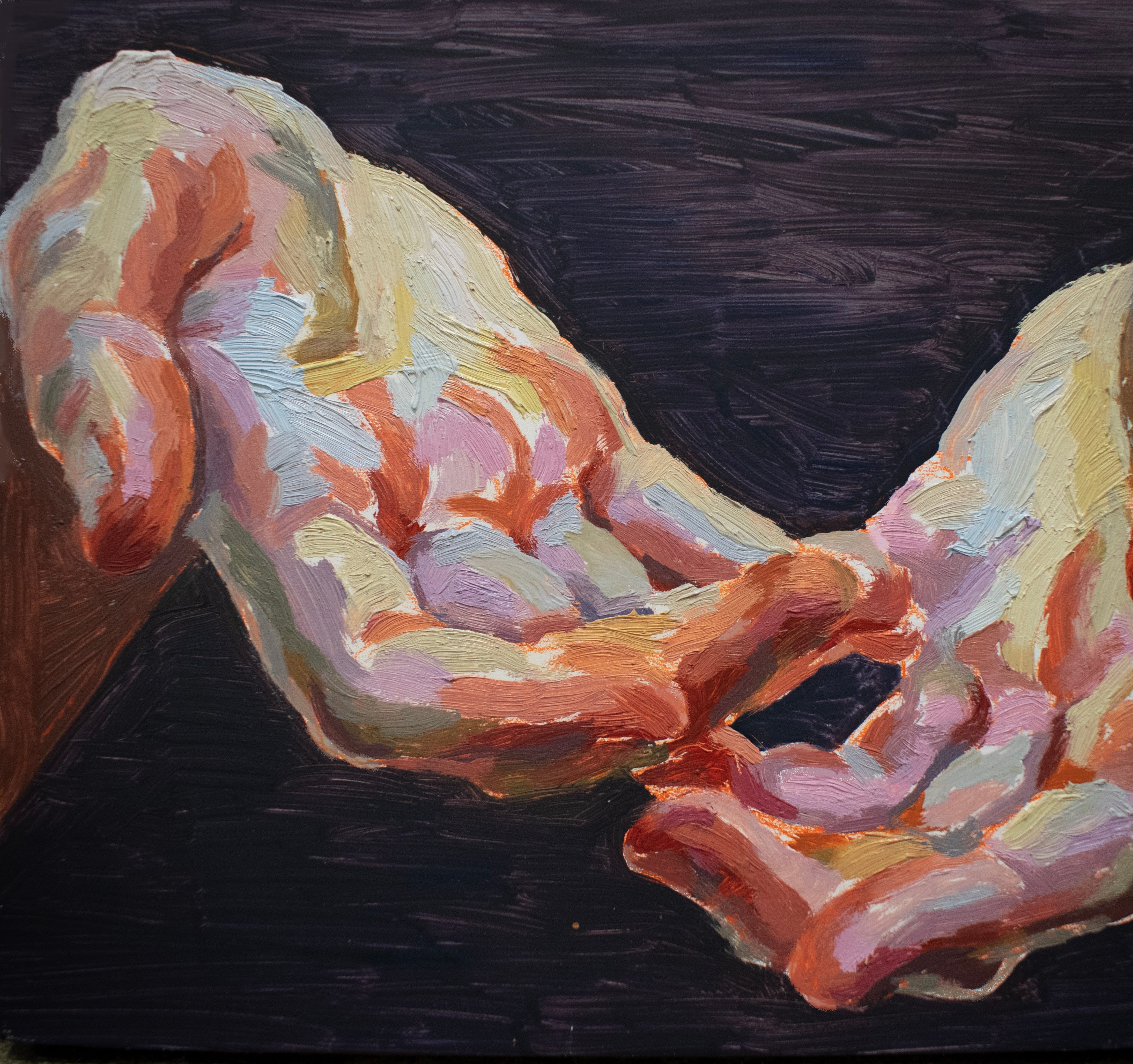

I read this breathlessly and now will read it again, regulating my breath. This one knocked me out.
Don't watch the news.