


Magic Farm
New York, October 2024
“I need to see it to believe it.” “Pics or it didn’t happen.”
While visiting Argentina several years ago, my mother overheard a family conversation about one of her aunts—who still lives in the countryside—slowly losing her eyesight due to pesticide exposure in the area. Disturbed by the family’s apparent resignation, we did our own research and quickly discovered that this was not an isolated case, but a widespread condition across the Global South—particularly in regions where governments can be easily influenced by corporations such as Monsanto.
What shocked me most, beyond the grim health consequences, was how beautiful the transgenic soy appeared. Lush, green, robust—visually immaculate. Of course, this resilience is precisely the point. The plant has been genetically engineered to withstand poison.
As someone whose work consistently engages with appearances, I found this paradox compelling. How might one photograph such a plantation and ensure it is perceived as a toxic landscape? Is that even possible? When Joe Apollonio and I visited the rural outskirts of Buenos Aires for a location-scouting trip, we rode in the back of a truck at sunset, passing through soy fields in full spring bloom. “Wow, I love nature,” we said to one another, momentarily forgetting that earlier that day I had discovered a pile of empty Roundup bottles at the base of a tree.
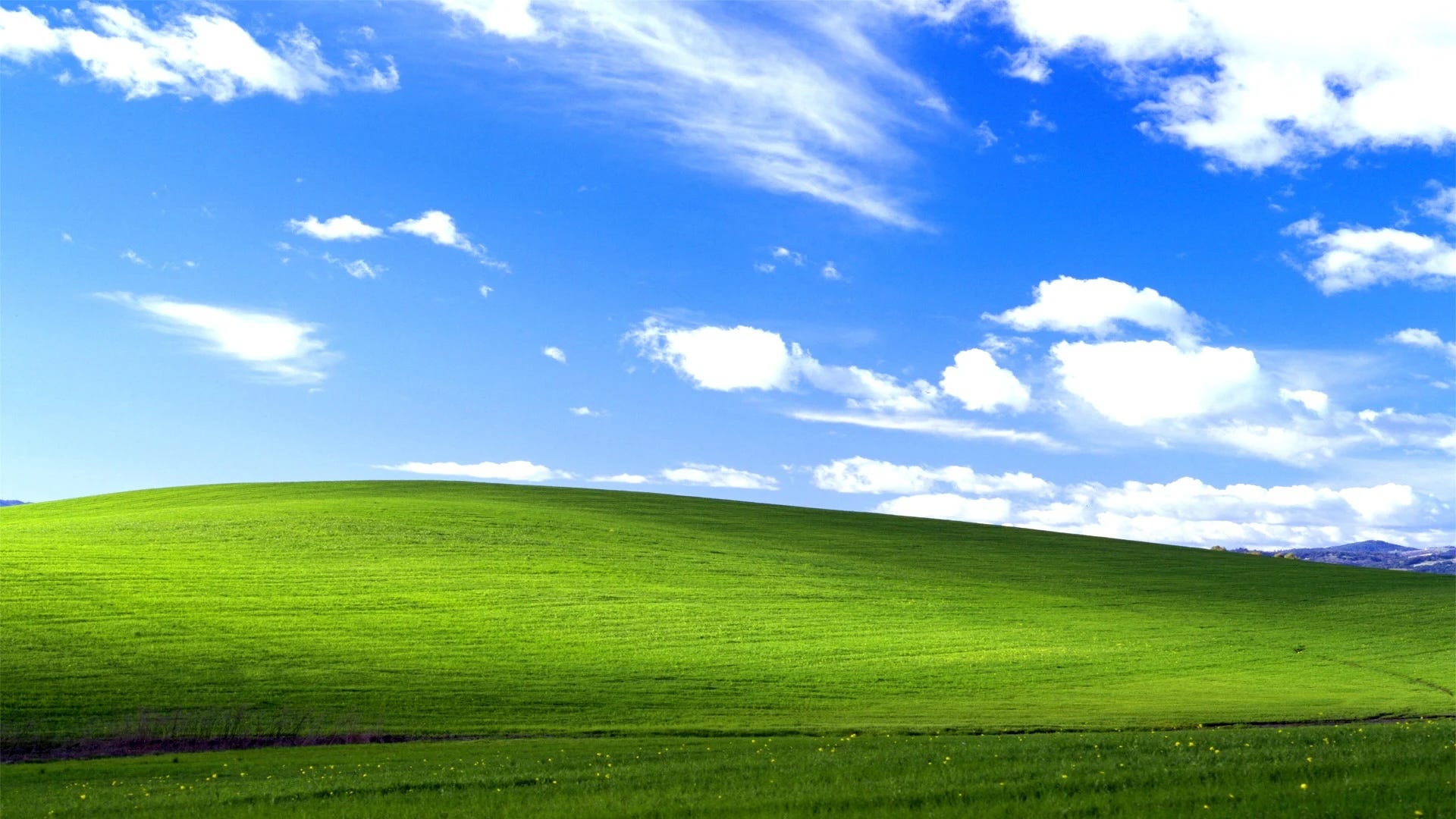
Our experience of the soy fields was one of overwhelming beauty—almost a closeness to God, or to Nature—that felt profoundly authentic, even as we knew it was not. Pure peace, and notably, no insects. I am aware that a genuinely organic farm is imperfect and uneven, but it was difficult not to be seduced into perceiving paradise in these unmarred plants, despite their origins in a lab. We were inside the famous Windows 95 screensaver of rolling green hills—aptly titled Bliss—and it felt sublime. Only temporarily, of course. Prolonged exposure to such “bliss” would result in serious illness.
Humans struggle to distinguish essence from appearance. We know our food is contaminated and that microplastics accumulate in our bodies—yet we cannot see them, so we move on. A presidential candidate poses for a photo-op at a local restaurant and is instantly transformed into a community hero. A dog appears to be smiling in a photograph, though it is in distress. Sometimes all we want is a good image, and not to be corrected on our assumptions.
My parents are archetypal Gen X hipsters, deeply invested in underground culture. Their lives revolved around cultivating a particular aesthetic as a form of rebellion—ironically reinforcing the trend-driven arm of the capitalist system. My childhood memories are saturated with trivia about bands, fashion, and youth culture, accompanied by rigid systems of classification. In response, I rebelled by shapeshifting. I role-played as an office worker while my father collected early issues of Vice magazine and my mother mocked me for not being cool and having a disdain for subcultures. My soul wears no clothes, I would think.
Through my parents and my own life choices—I attended art school, and eventually nearly everyone I knew worked for either Vice or American Apparel—I became familiar with hipster media and its tendency to exoticize and exploit “bizarre” stories from the Global South. Like Vice, I initially found humor in the provincial and formally uneducated Andean musicians such as Delfín Hasta el Fin, with his infamous song about the Twin Towers, or La Tigresa del Oriente, whose music videos—shot in Indigenous reserves with leopard-print-clad backup dancers—circulated as viral curiosities.
Yet I am also Latin American, the unglamorous type, with a religious Abuela who cleaned hotels for a living. I spent my life navigating these parallel realities: the cosmopolitan art student and the peripheral other wiring money back to South America via Western Union. This tension became the driving force behind my film Magic Farm. What if Berlanga’s Welcome, Mr. Marshall! also included the perspective of the Americans? What if my grandmother were approached by a group of New Yorkers? I wanted to make a film about a “visiting crew,” seen from both sides, unfolding through a dense comedy of errors. Most of my scripts and short stories occupy this in-between space. I am drawn to moments where innocent misunderstandings generate narratives that feel unexpectedly truthful.
In flight
October 2025
What is true? Whose perception is correct? Perhaps paranoia and distrust are the only viable responses. It’s been two years since I shot Magic Farm, and in that time AI-generated video has advanced exponentially. I am currently on a plane en route to Luhačovice in the Czech Republic to shoot a short film. Before leaving New York, the friend I’m collaborating with created mock-ups using Sora, generating images of himself in locations we had never visited. Though unsettling, the results felt disturbingly real. They made me uncomfortable. If simulation is this effortless, what is the purpose of traveling—of enduring long flights, bad coffee, and petty conflicts over legroom?
Once again, images and their contradictions. As a filmmaker, I am not afraid of AI. On the contrary, I believe it can function as a mirror, exposing cinema’s most common shortcuts and bad habits. By reproducing clichés and overused stylistic devices, AI strips away illusion and forces filmmakers to pursue more rigorous and sophisticated narrative languages. Since large language models are structurally bound to the past, should we not aim to create something genuinely new? If a cinematic “look” becomes predictable, perhaps it is our responsibility to avoid it entirely.
Before passing through security at JFK, I encountered a mediocre Dior advertisement featuring Mikey Madison, Mia Goth, and Greta Lee gently caressing grass as they walked. You know the gesture—the performative melancholy with which actors touch objects in a way no one ever does in real life. I witnessed the same affectation at the Venice Film Festival during the premiere of a famous director’s latest flick. Shortly afterward, a screening by a younger auteur felt similarly hollow: visually polished but emotionally vacant, as though an AI model had been prompted with “A24 + Safdie + gritty” and produced an image without a soul. It made me cringe.
Filmmakers bristle at AI-generated videos because they reflect our own laziness—our reliance on tropes and familiar gestures. When something looks and feels like “AI vomit,” perhaps the responsibility lies with us to be more attentive, more precise, more demanding of ourselves.
If AI is doomed to remix what already exists, then maybe our job is to insist on friction: on the miscommunications and moments that don’t scan as “content.” To make work that resists immediate legibility and to trust lived experience over simulation, even when the simulation looks better lit. And yet, when a Monsanto field appears more “natural” than untouched land, I am reminded of how easily perception collapses—and how quickly I, too, become complicit.
This essay is part of Strange Visions, our ongoing series on defamiliarization.

The first AI take that resonates. So much more complicated than simple condemnation, artists (and particularly writers) find themselves morally repulsed by the technology because they fear it can do their own job better than they can -- or at least, that lazy capitalists will think that. The answer to this fear is obvious to me. Just create different, better, more radical art. Instead of feeling afraid, act more decisively.
Loved Magic Farm and felt really satisfied reading this meditation a few years after the fact :)
I can provide all the images you require if you want to see what degraded environments look like. I study wreckage and destruction, looking for beauty in all the expected places. War is my favorite hunting grounds. I collect photos of ruins of Ukraine, and have accumulated nearly a hundred drone pics of Russian fighters after their demise. Here is a sample: https://thildebrandt.crevado.com/my-work